
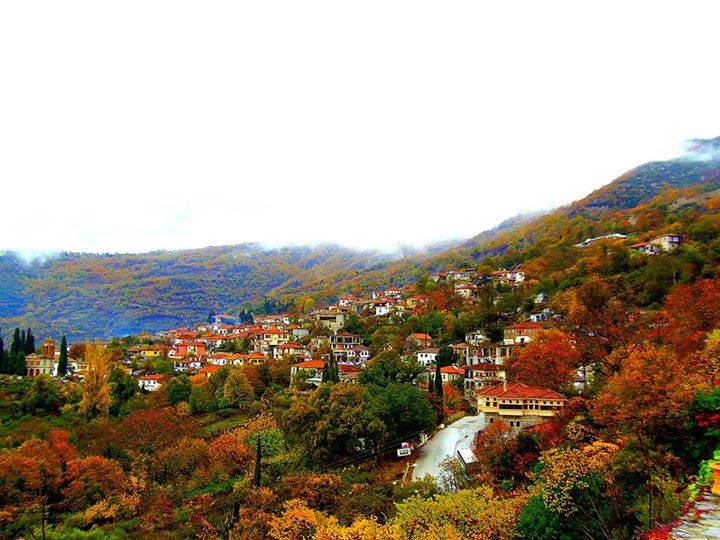
 We are in the beautiful Ampelakia where the cooperative idea was born, here the newly established cooperative of chestnut producers begins its activity. Ampelakia is a traditional settlement of the prefecture of Larissa, built on the northwestern slopes of Mount Ossa at the entrance to the valley of Tempe. The village is famous for its great mansions as it experienced great economic growth in the past, thanks to the processing and dyeing of red yarn produced from the processing of the rice plant (Rubia the dyer – Rubia tinctorum). Ampelakia belongs administratively to the Municipality of Tempo, while in the past it was the seat of the homonymous community.
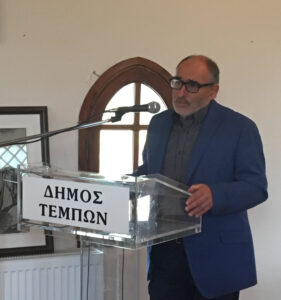 “We remind you that the world’s first Cooperative in Ampelakia was founded in 1672 and had as its main priority the yarn trade. Back then it was based in Vienna and exported all over Europe,” adds the president of the cooperative. Efthimios Kazantzis is himself a chestnut producer and has been exporting chestnuts to Italy and France in recent years. As he points out, “we managed to gather 52 producers from the villages of the area and establish the cooperative. We also cooperate with the other cooperatives in the area. Our goal is to be able to trade around 5,000 tons of chestnuts per year. There are positive prospects for exports, since the Greek chestnut has managed to gain recognition in the markets of Europe.
With the cooperation, chestnut producers will be able to earn a better price. For this year, the cooperative gave a price of 3.50 euros per kilo (for good quality), which is increased by 70 cents compared to last year.”
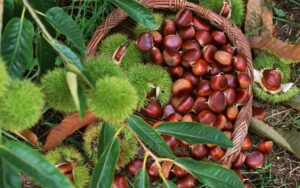 Also, in the next period of time, they are expected to submit a file to the Ministry of Anti-Corruption for the registration of the chestnut of the region as a Product of Geographical Indication (PGI), which is expected to give added value to the product.
“But we don’t just stay here, we cross the borders of the country”, he emphasizes, adding: “We have already been in contact with the cooperative of chestnut producers from Avellino, Italy. An attempt is being made to unite with the Italians and to proceed with the establishment of a “European” cooperative of chestnut producers. Through such partnerships we will manage to dominate the EU markets.
My personal thought is that we manage to drive the chestnut into processing. To produce marron glace, a processing company needs machinery and large quantities of raw material to be viable. We are already talking to companies from France to see if we can work with them.”